May 20, 2025
Are You Solving the Right UX Problem? Quick Techniques to Uncover and Validate True User Needs
The first problem statement you get is rarely the real one. Here are two quick techniques that help you find what's actually wrong before you start designing.
Imagine spending weeks carefully redesigning an app's login page. The typography looks great, the visuals are attractive, and the layout seems perfect. Yet, when the changes go live, nothing improves — users still abandon the login process. Eventually, you discover the real issue: the password complexity requirements are confusing. Weeks of effort are lost because the team solved the wrong problem.
Sound familiar?
As UX designers, we've all been there. Often, the initial problem we're given to solve isn't the real issue at all. Quickly identifying and validating the true problem can save enormous time, effort, and resources — ultimately leading to better and more meaningful design solutions.
Why Do UX Designers Often Miss the Real Problem?
It's easy to jump straight into solving what initially seems obvious. Here are some common reasons why designers get off track:
- Accepting assumptions without questioning. Teams might assume the first problem provided by stakeholders is correct.
- Rushed timelines. Tight deadlines cause shortcuts, skipping important validation steps.
- Limited collaboration. Not involving users, researchers, or stakeholders enough leads to superficial insights.
- Over-reliance on intuition. Depending heavily on past experiences rather than fresh user insights can reinforce incorrect assumptions.
What's the Real Cost of Not Validating UX Problems?
Not validating the actual problem can be costly in several ways:
- Wasted time and effort on ineffective solutions
- Poor use of resources and budget
- Only slight improvements that don't address real issues
- User frustration and dissatisfaction
- Increased risks of project delays or failures
- Negative impact on brand reputation and user trust
Quick Techniques to Validate UX Problems
Two simple yet powerful techniques — "5 Whys" and "So What?" — can quickly validate and clarify UX problems. Let's use a common scenario to illustrate how each works individually, and how they provide greater insight when used together.
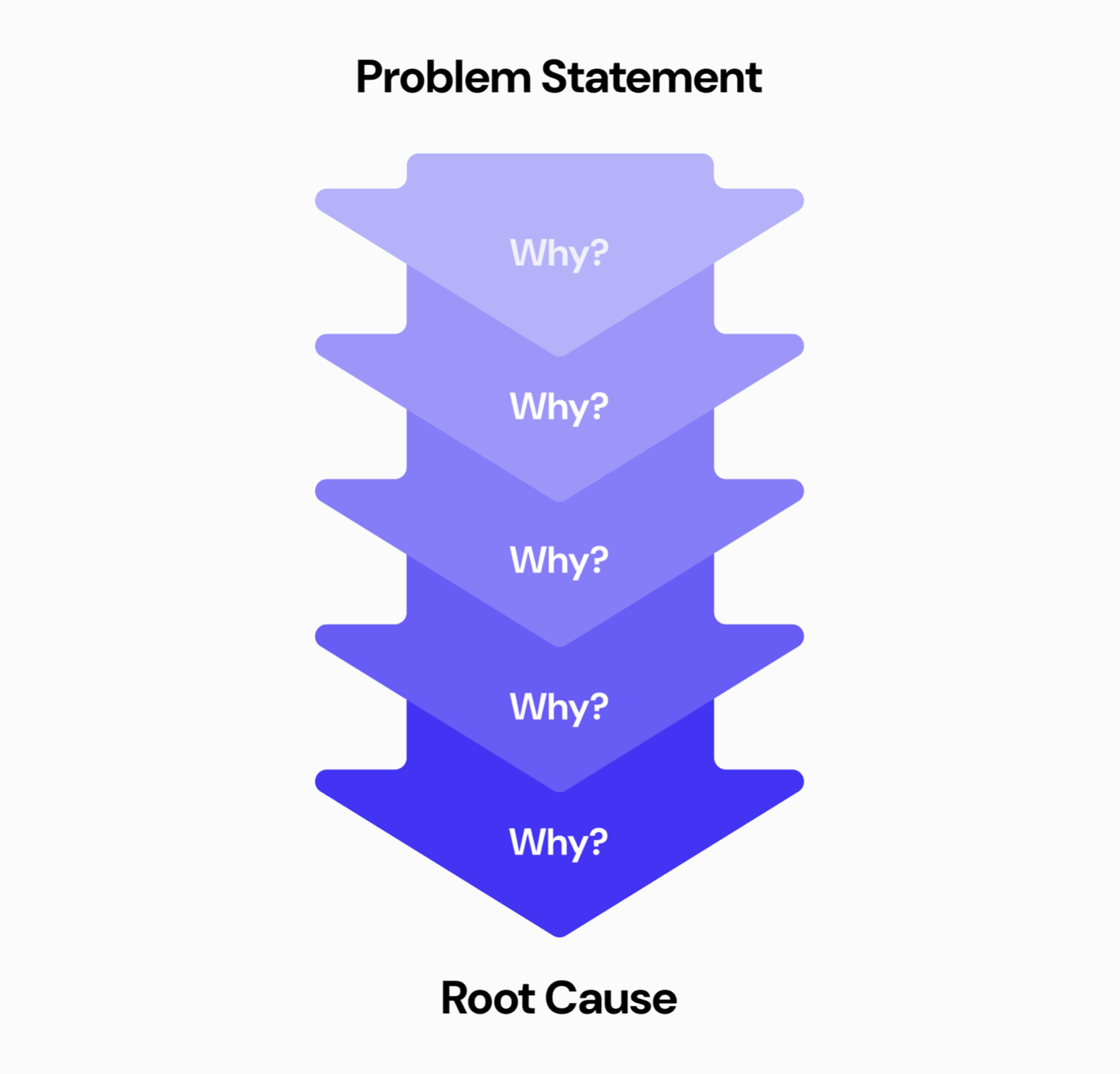
Technique 1: The "5 Whys" — Find the Root Cause
Developed by Sakichi Toyoda at Toyota, the "5 Whys" method helps you discover the root cause of a problem by repeatedly asking "Why?" — at least five times, or more if you're still uncertain.
Example Scenario: Users frequently abandon their shopping carts.
- Why? Users find the checkout process complicated.
- Why? The checkout form requires too much information.
- Why? Marketing wants extensive data collected upfront.
- Why? The UX team didn't balance user convenience with marketing data collection.
- Why? There was no clear communication or collaboration between UX and marketing teams.
Refined Problem Statement: Redesign the checkout flow to simplify forms, balancing marketing data needs with a user-friendly experience.
Technique 2: The "So What?" — Understand the Broader Impact
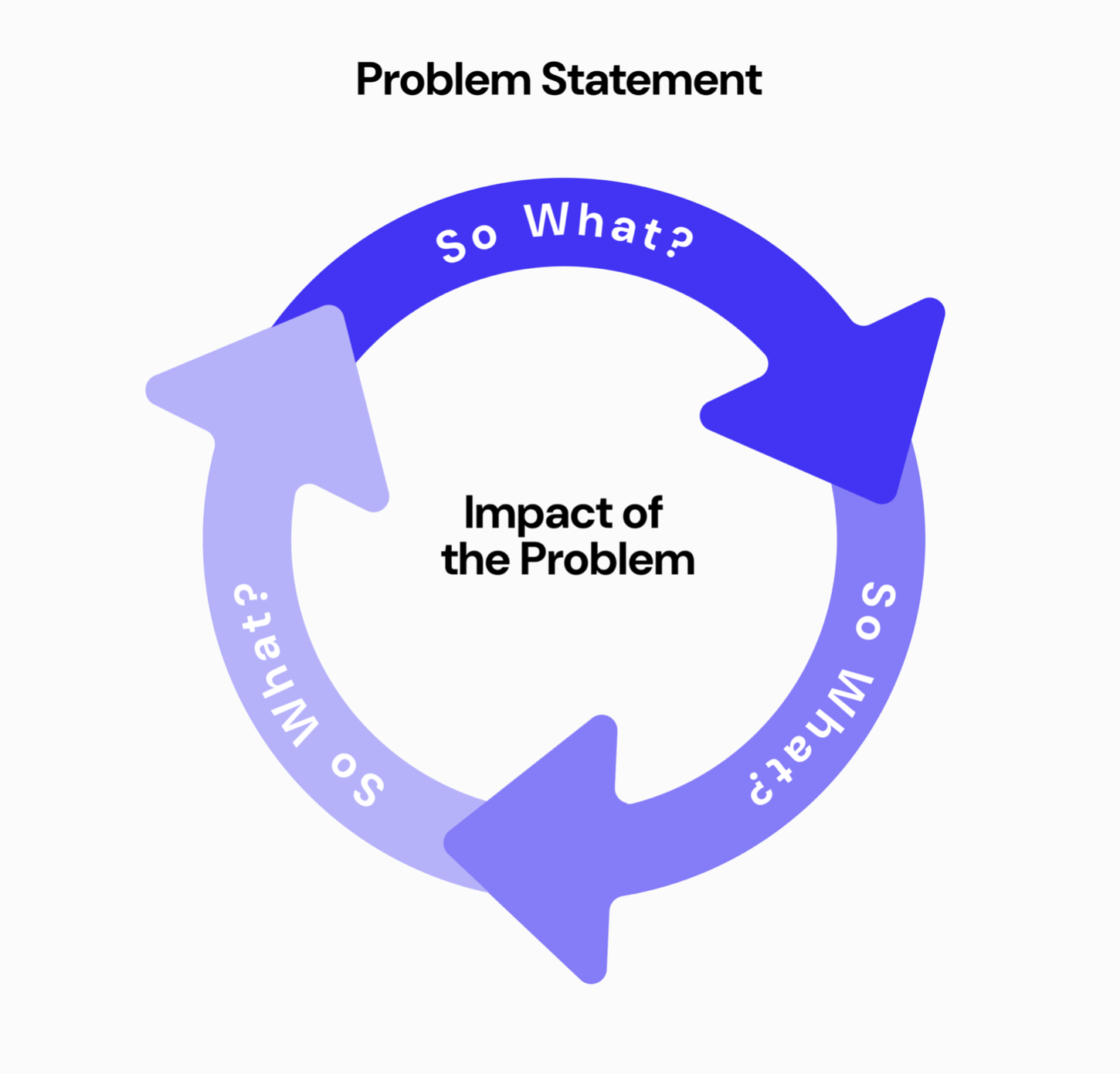
The "So What?" technique helps clarify why solving a specific problem is strategically important by repeatedly asking, "So what?"
Using the same scenario:
- Problem: Users frequently abandon their shopping carts.
- So what? Lost sales directly affect revenue.
- So what? Decreased revenue limits resources for future improvements.
- So what? Reduced resources hinder business growth and competitive advantage.
Critical Insight: Improving checkout usability directly impacts sales, customer satisfaction, and long-term business success.
Combining Both Techniques for Complete Understanding
Used together, these techniques provide designers with both depth and clarity:
- 5 Whys clearly identifies the real UX issue (simplifying the checkout form).
- So What? explains why solving the issue matters strategically, highlighting its broad impact on user experience and business goals.
This combined approach ensures you not only find the true UX problem but also understand its significance — helping prioritize design efforts effectively.
Start Validating Immediately
Ready to ensure you're solving the right UX problems? Start today:
- Challenge assumptions. Question initial problem statements rigorously.
- Use the "5 Whys." Quickly uncover root causes.
- Apply "So What?" Clarify why solving the problem is strategically important.
- Keep validating. Regularly apply these techniques throughout your projects.
Great UX design begins with understanding the right problems deeply — not just solving what's immediately visible. Our strength as UX professionals lies in asking meaningful questions. Start asking better ones today.